Category: actie

  • herdenking slachtpartij Ceuta 2016

    rapport sur Ceuta et Melilla (migreurop, GADEM, Cimade) dec. 2015

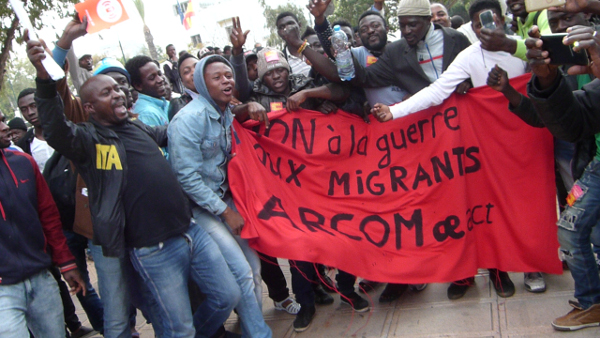
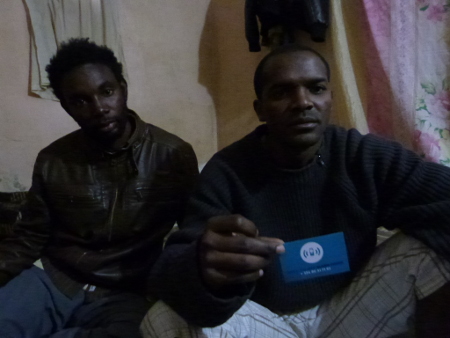
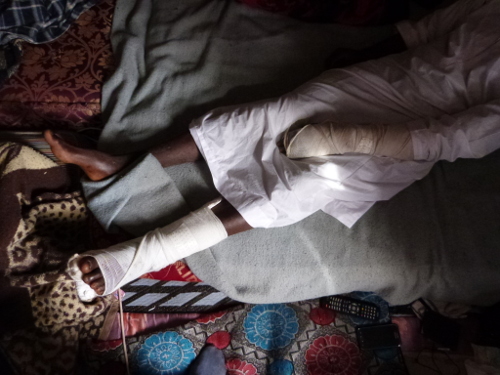
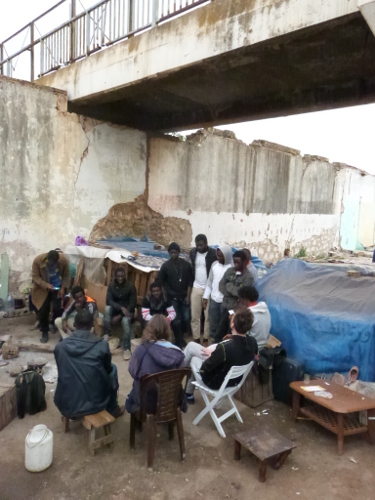
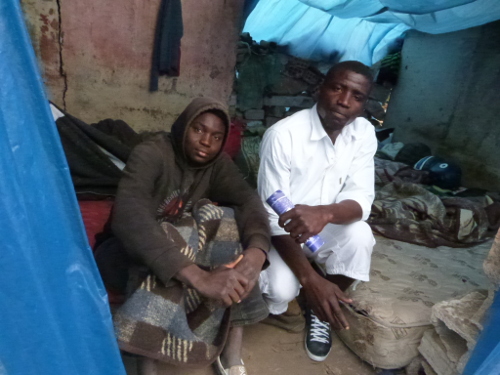
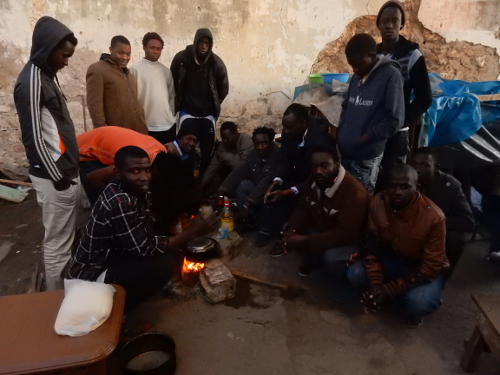
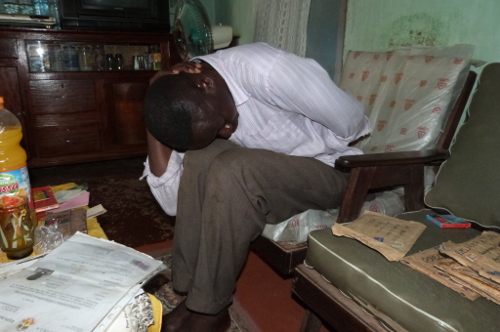
    Begin februari 2016 brachten twee mensen van All Included een bezoek aan Rabat/Marokko. Mede namens Afrique-Europe Interact namen wij deel aan de herdenking van de dood van 15 migranten in februari 2014, bezochten we een opvanghuis voor vrouwelijke migranten, een getto (illegaal kamp) van een vijftigtal migranten onder een brug in Rabat en diverse foyers (woongemeenschappen) waar migranten hun kansen afwachten om naar Europa te gaan.

    Guardia-del-Ceuta-que-dels_ARAIMA20150212_0033_5

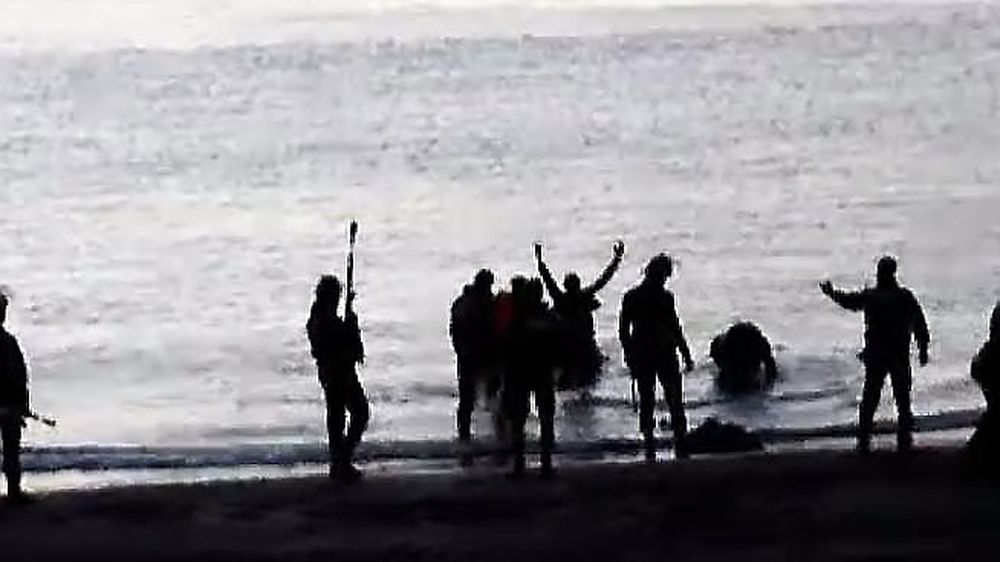
    6 februari 2014. Vijftien migranten die probeerden vanaf Marokko zwemmend het strand van Tarajal in de Spaanse enclave Ceuta te bereiken vonden de dood. Met gebruik van rubber- en andere anti-oproerpolitie kogels werd door de Spaanse grensbewakers van de Guardia Civil echter niet voorkomen dat een groep aan land kwam. Een Spaanse rechter vond dat er geen strafbaar feit gepleegd was met het gebruik van deze middelen. Tevens was de onmiddellijke uitzetting naar Marokko van de 23 migranten die wel levend de kust bereikten niet strafbaar.

    sit-in2016b

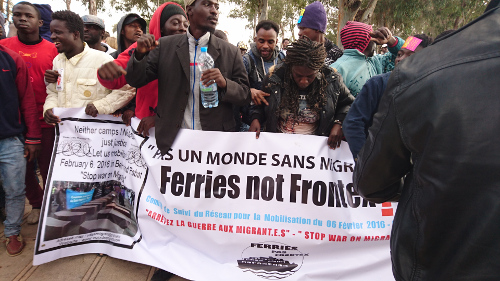
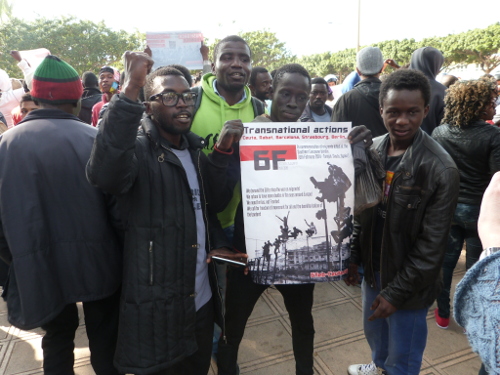
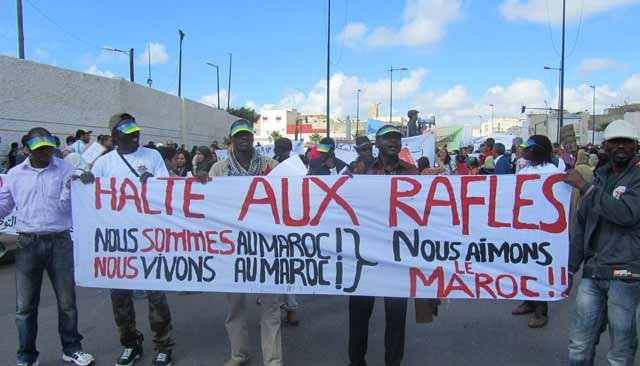
    Een kleine vijfhonderd migranten kwamen op 5 februari 2016 bijeen voor de Spaanse consulaat aan de avenue An Nasr in Rabat om te protesteren tegen de gewelddadigheden gepleegd tegen de migranten die pogen Europa te bereiken. Een geluidswagen werd door ingrijpen van de politie verboden maar de sit-in zelf werd toegestaan. Een rij oproerpolitie hield ons nauwlettend in de gaten. Het aantal migranten die uit diverse steden in het land kwamen was groter dan verwacht. Tijdens de voorbereidingen werd op een bepaald moment opgeroepen niet meer naar Rabat te komen bij gebrek aan financiën. De emotie die bij de bijeenkomst vooraf en tijdens de sit-in losbarstte was werkelijk uitzinnig. In het dagelijks leven is het nadrukkelijk uiten van de aanwezigheid van sub-Sahara migranten ongepast. De woede over de minachting voor deze migranten in Marokko (en Europa) bleek groot. Daar is  dan ook alle reden voor. Onlangs zijn alle sub-Sahara migranten langs de kust in Noord-Marokko opgepakt en naar de grote steden uitgezet. Dit ging gepaard met veel geweld en grove schending van mensenrechten.

    commemoration06022016Rabat2

    Het afgelopen jaar hebben ons de kracht van de migratiebeweging getoond. Migranten laten zich niet afschrikken door de Europese grensbewaking. Zoekend naar de meeste kans op binnenkomst in Europa wordt met veel druk toegang verschaft tot het Schengengebied. Migranten maken hierbij gebruik van hun recht tot het zoeken naar een menswaardig perspectief. Veelal gaat het om een verlichting van de diepe armoede, corruptie en onderdrukking; werk in Europa betekent een aanzienlijke bijdrage aan het gezinsinkomen. Door een dichtgetimmerd visumsysteem sinds eind jaren 1980 die hele landen uitsluit van een legale binnenkomst worden mensen verplicht gebruik te maken van irreguliere kanalen, de mensensmokkel.

    sit-in2016aFrontex, agentschap voor Europese grensbewaking, is een militair wapen in de oorlog tegen de migratie. Het beschikt over een arsenaal aan militair materieel en personeel uit alle landen van de Europese Unie en van het Schengengebied. Hiermee wordt middels Rabits (Rapid Border Intervention Teams) zoals onlangs in Griekenland direct ingegrepen daar waar grote groepen migranten plots Europa binnenkomen. Frontex Risico-analyses worden gemaakt om deze flexibiliteit voor te zijn. En zo worden migranten gedwongen gevaarlijkere routes te nemen met alle doden ten gevolge. Maar van enige bijdrage aan de oplossing van het probleem van het vraagstuk is geen sprake. Armoede, corruptie en onderdrukking worden niet aangepakt. Sterker nog, de corrupte staten waar migranten voor vluchten worden gesteund door de Europese staten en Unie. Deze steun is nodig om te komen tot de externalisatie van de grensbewaking. Daar het bewaken van de Middellandse Zee en de landgrenzen van de steeds groter wordende unie nauwelijks te behappen is wordt een buffer buiten de Europese grenzen gevormd. In deze transatielanden dient migratie aangepakt voordat  de grens van Europa wordt bereikt. Dat hiermee ook vluchtelingen de kans op asiel ontnomen wordt is meer dan ‘colletaral damage’. Er wordt immers ook voor deze groep geen alternatief geboden voor hun noden en rechten.

    Middels de foto-expositie “Europe closes our borders – Frontex and the externalization of European border control” krijgt de externalisatie in West-Afrika een gezicht. Het vertelt het verhaal van de grensbewaking aan de kust van Senegal en Mauritanië die de rol van waakhond voor de Europese Unie spelen in ruil voor een financiële en materiële vergoeding. Detentiecentra, grensposten en uitzettingen naar landen van herkomst worden hier betaald door landen van de Europese Unie. De titel “L’Europe ferme nos frontières” is afkomstig van het Senegalees Dagblad Le Soleil van de dag na de ondertekening van de terugname-overeenkomst tussen Spanje en Senegal in 2006. Hiermee wordt Europa afgeschermd van de vluchtelingen uit West-Afrikaanse landen van oorlog, armoede, droogte en corruptie: Ivoorkust, Liberia, Guinee, Togo, Mali.

    commemoration06022016Rabat4Net als Turkije die nu bijzondere aandacht van de EU krijgt mag Marokko een speciale positie genieten. Het land is zich aan het ontwikkelen van een emigratieland (‘gastarbeiders’) via transitland naar ontvangstland. Het leven van de Sub-Sahara migrant in Marokko is sterk beschreven door Emmanuel Mbolela in zijn boek “Mijn reis van Congo naar Europa. Tussen verzet, vlucht en ballingschap”. Emmanuel, Congolese activist en vluchteling, vertelt hierin over zijn verzet in Congo, zijn tocht van twee jaar via de woestijn en zijn verblijf in Marokko van vier jaar als illegaal, als sans-papiers. Binnenkort wordt dit manifest in het Nederlands uitgegeven door uitgeverij Van Gennep.
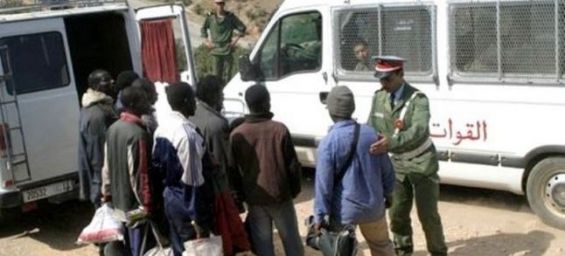
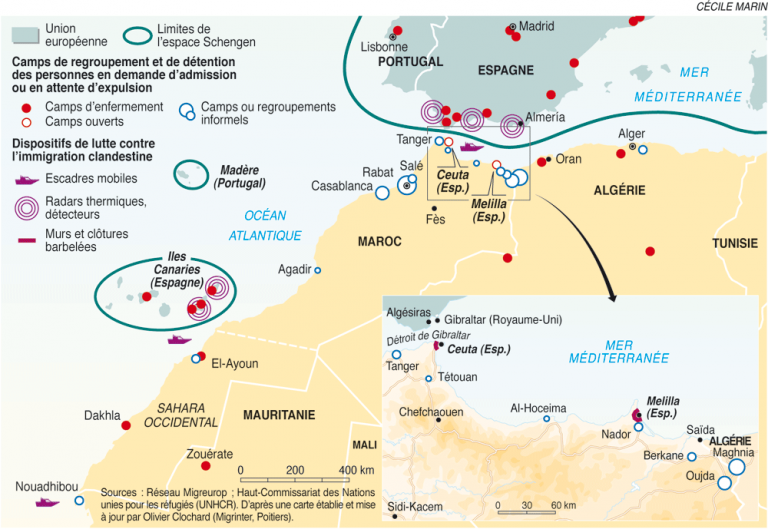
    Laatste ontwikkeling in Marokko is het schoonvegen van de kust langs de Middellandse Zee: alle kampen in de bossen bij de Spaanse enclave Ceuta en Melilla zijn platgebrand en iedereen is gearresteerd en naar steden richting zuiden gebracht. Hiermee wordt de overtocht per boot en land heel moeilijk gemaakt. De kracht van de migratie is echter blijvend sterk. Gevolg van dit alles is een toename van de oversteek naar de Canarische Eilanden en een trek naar Libië.

    De doorvoerstad Tanger in de buurt van Ceuta is altijd gevaarlijk terrein geweest voor sub-Sahara migranten, maar de situatie is geëscaleerd sinds 2015. Vooral tijdens de ramadan 2015 heeft de onderdrukking door de autoriteiten en gewelddadige aanvallen door de lokale bevolking een alarmerende dimensie bereikt. In juni 2015 werd de migrantenpopulatie van de Boukhalef wijk onderworpen aan grootschalige deportaties. Een jonge sub-Sahara migrant stierf toen hij van een dak viel op de vlucht voor de politie. In oktober breidde de politiekorpsen hun actieradius op de hele stad van Tanger en de omliggende bossen. Die migranten werden slachtoffer van arrestatie (zij ondergingen lange identificatieprocessen incl. foto’s en vingerafdrukken) en van deportaties naar Tiznit, meer dan 1000 km ten zuiden richting Mauritanië. Anderen werden (tijdelijk) gevangengezet in geïmproviseerde detentiecentra in het binnenland, in Fez, Marrakech, Casablanca, Rabat en Taroudant. Vaak werd het sub-Sahara migranten niet toegestaan ​​de bus naar het noorden te nemen. Deze behandeling moedigde meer en meer migranten aan om op weg te gaan naar het door oorlog geteisterde Libië, om zo te proberen Italië te bereiken.

    36417e6dff6cbea50ad50fb7448cca1c_thumb_565

    Gevallen zijn gemeld dat migranten in Tanger gearresteerd vervolgens werden overgebracht naar de haven Tanger Med op 50 km afstand. De algemene aanname is dat dit soort acties werden uitgevoerd met het oog op een verhoging van het aantal mensen dat op zee onderschept werd, en aldus de efficiëntie aantoonde van de Marokkaanse grenscontroles. Sinds de EU-Marokko overeenkomsten (actieplan) uit 2013 ontvangt het Koninkrijk Marokko 150 miljoen euro om de politieke en economische betrekkingen, maar ook de grenscontrole te intensiveren.

    Razzia’s tegen migranten kampen in de bossen demonstreren een ander niveau van escalatie. In de bossen worden de voorlopige onderkomens, tenten en persoonlijke bezittingen regelmatig in brand gestoken. Tijdens die operaties is het gebruikelijk dat er gewonden en zelfs doden vallen. Getroffenen ervaren de politie operaties als echte klopjachten, zoals het geval van de tragische dood in november 2015 van twee Kameroeners in het bos zeven kilometers van Ceuta. Ze werden door de militaire politie in een grot in de rotsen gedreven en vergast door traangas. Acht migranten die de politie informeerden nadat zij de lichamen vonden werden gearresteerd en naar het zuiden van Marokko gedeporteerd.
    foyerGuineeenRabat
    mm
    blesse_Ceuta_Rabat
    mm
    ghetto_SousPontRabat
    mm
    ghettoSousPontRabat
    mm

    mineurs 3klein

    mm

    Rafles-Maroc

    mm

    migreurop-768x529

    mm

    safehouseRabat1

    mm

  • Déclaration de la Société Civile d’Afrique de l’Ouest sur le Plan d’action Valletta

    [FR] ci-dessous

    DECLARATION FROM THE WEST-AFRICAN CIVIL SOCIETY AFTER THE MEETING ON THE IMPLEMENTATION OF THE LA VALLETTA ACTION PLAN BY THE ECOWAS MEMBER STATES.

    Accra, February 9th – 11th 2016.

    The West African civil society organisations present in Accra, Ghana, greet favourably the ECOWAS meeting on the implementation of the action plan adopted by the EU and African states at the La Valletta summit in Malta, on November 11th and 12th 2015.

    West African countries cannot remain indifferent to the ongoing drama happening off the European coasts, in the Sahara desert and in the Gulf of Guinea. Civil society is thus pleased with the strong involvement of the ECOWAS member states in finding solutions to this phenomenon.

    In the perspective of the La Valletta summit and in order to define an ECOWAS common stand, many meetings took place between heads of states and ministers between September 2015 and November 2015. The West African civil society is glad to have been included all along this process in the dialogue framework.

    However, its message towards the heads of states does not fully come across. Indeed, the crisis Europe faces with migrants’ arrival and the obstructions to freedom of movement within the Shengen Area should enable ECOWAS to present itself as a model of free movement area.

    84% of West African migrants live in another country from the ECOWAS. This one observation is sufficient to show that the migration stakes ECOWAS member states have to meet are relatively specific. On some points they can be far from the EU demands in terms of migration management.

    Our populations wish to reach a better mobility within their area. Their will goes against the temptation of movement control in the West African area foreshadowed in the La Valletta action plan.

    The five major points from the La Valletta action plan and the creation of an “orientation and professional training center” for migrants in Agadez, Niger, are worrying. Both of them lead civil society to fear the questioning of our historical freedom of movement in the West African area as ratified in ECOWAS protocols. Despite security risks due to more and more acts of terrorism (condemned by the civil society), civil society remains convinced that the appropriate answer to migration flow lies in migration policies respectful towards migrant workers’ rights and those from their families.

    The civil society therefore urges the ECOWAS member states to take into consideration their population’s right to free movement, both in the La Valletta action plan’s implementation and in the projects yet to be submitted to the 1.8 billion € fiduciary funds set by the EU.

    The civil society stresses again that the deep causes of irregular migration lie in restrictive migration policies developed by the EU over the last years. No solution to irregular migration should be found without a frank and honest dialogue between the EU and ECOWAS state members, and this, in order to offer to people (especially to the youths) mobility opportunities and visa exemptions such as obtained in some Latin American countries. Consensual mobility could prevent West African migrants to join people smuggler networks. It would also foster creativity and job generating production investments from young Africans after their migration experience.

    Faced with climate crisis, drought, coastal erosion and more and more natural catastrophes in the ECOWAS area, the civil society stresses the need to take into account resilience to climate change in all the projects yet to be submitted to the fiduciary funds. A dialogue should also be opened in the frame of the La Valletta action plan implementation in order to find solutions to the issue of internal refugees and displaced persons, who mainly find themselves in the ECOWAS area. Despite their lack of resources, states are now bearing the cost of this issue.

    The fight against human trafficking cannot be limited to cracking down on people smugglers. Regarding this topic and within the fiduciary funds frame, the civil society stresses the need to support projects helping to strengthen the legal frame and the victims’ protection. It also invites the ECOWAS member-states to ratify all legal instruments relating to human trafficking, migrant trafficking and domestic work. The African civil society remains convinced that creating a safe channel for professional migration and university mobility inside and outside the ECOWAS area is a possible answer to fight human trafficking and migrant trafficking.

    The West African civil society wishes to point out its reluctance regarding the voluntary return mechanisms currently at work between European states and the ECOWAS member states. In order to protect the migrants’ dignity, the civil society likes to remind that returns shall take into account the risks of insecurity and precariousness faced by the person who comes back. Given the importance of the diaspora members – regardless of their legal situation in the country where they live – for the development of ECOWAS Member States, each return should take place in a respectful way and in a concerted manner with the ECOWAS member-states including the necessary support for psychological monitoring and professional reintegration of the migrants in their origin country.

    According to the civil society, the diaspora has a big role to play in developing a win-win migration between ECOWAS member states and the EU. Therefore the civil society urges that projects developed for or by the Western African diaspora in Europe benefit from facilitated mechanisms to access funds from the fiduciary funds.

    In order to follow the implementation of the La Valletta action plan, the funding from the fiduciary funds and the West African migrants’ human rights, all the participants from civil society present in the Accra meeting have decided to create an Observatory of the West African Civil Society on the La Valletta Action Plan. This observatory will enable a better representativeness of civil society in the national and regional dialogues on migration.

    We call the ECOWAS commission and the technical and financial partners to support this initiative.

    Accra, Feb 11th 2016.


    ORGANISATIONS COUNTRY
    1 ONG UNION FAIT LA FORCE (UFF) BENIN
    2 ALERT MIGRATION BURKINA FASO
    3 MIGRATION POLICY AND ADVOCACY NETWORK (MiPAN) GHANA
    4 RESEAU AFRIQUE JEUNESSE DE GUINEE (RAJ-GUI) REPUBLIQUE DE GUINEE
    5 MOVIMENTO NACIONAL DA SOCIEDADE CIVIL PARA A PAZ , DEMOCRACIA E DESENVOLVIMENTO (MNSCPDD) GUINE-BISAU
    6 ECOWAS CIVIL SOCIETY LIBERIA
    7 ASSOCIATION MALIENNE DES EXPULSES MALI
    8 AMLGAMATED YOUTH MOVEMENT SIERRA LEONE
    9 ENDA DIAPOL SENEGAL
    10 VISIONS SOLIDAIRES TOGO


    Contact persons :

    1. Samir ABI, Visions Solidaires, TOGO, email : samirvstg@gmail.com
    2. Eric PEASAH, Migration Policy and Advocacy Network, GHANA, email : epeasah@yahoo.com


    [FR]

    DECLARATION DE LA SOCIETE CIVILE OUEST AFRICAINE A L’ISSUE DE LA REUNION SUR LA MISE EN ŒUVRE DU PLAN D’ACTION DE LA VALETTE PAR LES ETATS MEMBRES DE LA CEDEAO

    Accra, 9 au 11 février 2016

    Les organisations de la société civile ouest africaine présentes à Accra au Ghana saluent la réunion de la CEDEAO sur la mise en œuvre du plan d’action adopté par l’Union Européenne et les Etats Africains au sommet de la Valette à Malte, les 11 et 12 novembre 2015.

    Le drame, qui continue au large des côtes européennes, dans le désert du Sahara et dans le Golfe de Guinée, ne serait laisser les pays ouest africains indifférents. Ainsi la société civile ouest africaine se réjouit de voir la forte implication des Etats membres de la CEDEAO pour trouver des solutions à ce phénomène. La perspective du sommet de la Valette a permis, de septembre 2015 à novembre 2015, de nombreuses réunions au niveau des Chefs d’ Etat et au niveau ministériel pour définir une position commune de la CEDEAO. La société civile ouest africaine se réjouit que tout au long de ce processus elle ait été associée dans les cadres de dialogue mis en place à cet effet. Cependant son message à l’endroit des Chefs d’Etats peine encore à se faire entendre.

    En effet la crise de l’Europe face à l’arrivée des migrants et les obstructions qui naissent dans la libre circulation au niveau de l’espace Schengen doivent permettre de faire émerger la CEDEAO comme un modèle d’espace de libre circulation. 84% des migrants ouest africains vivent dans un autre pays de l’espace CEDEAO. Ce constat à lui seul démontre que les enjeux de la migration à laquelle doivent répondre les Etats membres de la CEDEAO sont assez spécifiques et peuvent être en certains points éloignés des demandes de l’Union Européenne en matière de gestion migratoire. La volonté de nos populations d’aller vers une meilleure mobilité dans leur espace se heurte à la tentation du contrôle de la mobilité dans l’espace ouest africain tel que le laisse présager le plan d’action de la Valette.

    Les cinq points majeurs du plan d’action de la Valette et la création annoncée d’un centre d’accueil, de formation professionnelle et d’orientation des migrants à Agadez au Niger, laisse craindre à la société civile une remise en cause de libre circulation historique de nos peuples dans l’espace ouest africain entérinée par les protocoles de la CEDEAO. Malgré les risques sécuritaires liés à la multiplication des actes terroristes, que la société civile condamne, elle reste persuadée que la réponse adéquate à l’afflux migratoire se trouve dans des politiques migratoires respectueuses des droits des travailleurs migrants et des membres de leur famille.

    La société civile invite donc les Etats membres de la CEDEAO à prendre en compte la nécessité du respect du droit à la libre circulation de leur population dans le suivi du plan d’action de la Valette et dans les projets à soumettre au fonds fiduciaire de 1,8 milliards d’euro mise en place par l’Union Européenne.

    La société civile rappelle que les causes profondes de la migration irrégulière se retrouvent dans les politiques migratoires restrictives développées par l’Union Européennes ces dernières années. Une solution à la migration irrégulière ne saurait être trouvée sans un cadre de dialogue franc et sincère entre l’Union Européenne et les Etats membres de la CEDEAO pour offrir aux populations, et en particulier les jeunes, des opportunités de mobilité et d’exemption de visa tel que obtenu par certains pays d’Amérique Latine. Une mobilité consensuelle pourrait permettre d’éviter que les migrants ouest africains aillent alimenter les réseaux de passeurs, et favorisera la créativité et des investissements productifs créateurs d’emploi, des jeunes africains après leur expérience migratoire.

    Face à la crise climatique, la sécheresse, l’érosion côtière et les catastrophes naturelles qui se multiplient dans l’espace CEDEAO, la société civile insiste sur la nécessité de prendre en compte dans les projets qui seront soumis au fonds fiduciaire la résilience face au changement climatique. Un dialogue doit également s’ouvrir dans le cadre du suivi du plan d’action de la Valette pour trouver des solutions au problème des réfugiés et déplacés internes qui se retrouvent majoritairement dans l’espace CEDEAO et dont le coût est supporté par les Etats malgré leur manque de ressource.

    La lutte contre la traite des personnes et le trafic des migrants ne serait juste se limiter à une guerre contre les passeurs. A ce sujet, la société civile rappelle la nécessité dans le cadre du fonds fiduciaire de soutenir les projets allant dans le sens du renforcement du cadre juridique et de la protection des victimes de traite et de trafic. Elle invite les Etats membres de la CEDEAO à ratifier l’ensemble des instruments juridiques sur la traite des personnes, le trafic des migrants et le travail domestique. La société civile africaine reste persuadée qu’une réponse possible pour éviter la traite des personnes et le trafic des migrants, serait la création de filière sécurisée de migration professionnelle et de mobilité universitaire à l’intérieur et hors de l’espace CEDEAO.

    La société civile ouest africaine tient à exprimer ses réserves sur les mécanismes de retours volontaires actuellement en œuvre entre les Etats européens et les Etats membres de la CEDEAO. Elle tient à rappeler que dans l’intérêt de la dignité des migrants tout retour doit se faire en tenant compte du risque de précarité et d’insécurité dans lequel pourrait se retrouver la personne retournée. Au vu de l’importance des membres de la diaspora, quelque soit leur situation légale dans les pays d’accueil, pour le financement du développement des Etats membres de la CEDEAO, tout retour doit être mené dans le respect et dans la concertation avec les Etats membres de la CEDEAO avec une nécessaire prise en charge du suivi psychologique et de la réinsertion professionnelle du migrant dans les pays d’origine.

    La diaspora a, de l’avis de la société civile, un grand rôle a joué pour développer une migration « gagnant gagnant » entre les Etats membres de la CEDEAO et l’Union Européenne. La société civile invite donc à des mécanismes facilités d’accès au financement du fonds fiduciaire des projets développés par ou à l’endroit des diasporas ouest africaines en Europe.

    Afin de suivre la mise en œuvre du plan d’action de la Valette, des financements qui seront accordés par le fonds fiduciaire et le respect des droits humains des migrants ouest africains, l’ensemble des acteurs de la société civile présente à la réunion d’Accra ont convenu de constituer un Observatoire de la Société Civile Ouest Africaine sur le Plan d’Action de la Valette. Cet observatoire permettra une meilleure représentativité de la société civile dans les cadres de dialogue régionaux et nationaux sur la migration.

    Nous appelons la Commission de la CEDEAO et les partenaires techniques et financiers à soutenir cette initiative.

    Fait à Accra le 11 février 2016

    ORGANISATIONS PAYS
    1 ONG UNION FAIT LA FORCE (UFF) BENIN
    2 ALERT MIGRATION BURKINA FASO
    3 MIGRATION POLICY AND ADVOCACY NETWORK (MiPAN) GHANA
    4 RESEAU AFRIQUE JEUNESSE DE GUINEE (RAJ-GUI) REPUBLIQUE DE GUINEE
    5 MOVIMENTO NACIONAL DA SOCIEDADE CIVIL PARA A PAZ , DEMOCRACIA E DESENVOLVIMENTO (MNSCPDD) GUINE-BISAU
    6 ECOWAS CIVIL SOCIETY LIBERIA
    7 ASSOCIATION MALIENNE DES EXPULSES MALI
    8 AMLGAMATED YOUTH MOVEMENT SIERRA LEONE
    9 ENDA DIAPOL SENEGAL
    10 VISIONS SOLIDAIRES TOGO


    Personnes de contact :

    1. Samir ABI, Visions Solidaires, TOGO, Tél : (+ 228) 90 79 44 12 email : samirvstg@gmail.com
    2. Eric PEASAH, Migration Policy and Advocacy Network, GHANA, Tél : (+233) 242 170 827 email : epeasah@yahoo.com


  • We Are Here

    Welcome to visit us! 19e vluchtpand (Burgerweeshuispad 301, Amsterdam, voor support 06 – 84 88 07 15)
    Brandbrief: Buitenschuldprocedure: niet voor vluchtelingen, mei 2016

    Waarom de ene uitgeprocedeerde asielzoeker mag blijven en de andere niet, dec. 2014

    Buddies gezocht voor bewoners vluchtgroep, nov. 2014

    Bad Brood Bed regeling, nov. 2015

    Rapport “Opvang van asielzoekers Vluchthaven succesvol”, juni 2014 (evaluation Vluchthaven – english version)

    WE ARE HERE is a group of refugees without papers, that want to make our problem visible. We moved from the tent camp at Notweg to the Vluchtkerk, than to the Vluchtflat in Slotervaart, to the Vluchtkantoor near Leidseplein, Vluchtbajes & Vluchtgebouw and Vluchtgarage,Vluchttoren, Vluchtgemeente, Vluchtkei, Vluchtpoort.

    self-organized migrant protests in the Netherlands


    Jullie kunnen de vluchtgroep We Are Here financieel steunen o.a. voor eten/gas/licht: bankrek. 609060 tnv XminY o.v.v. We Are Here. Bedankt!

    flyer We Are Here

    www.wijzijnhier.org
    Facebook: Wij zijn hier: https://www.facebook.com/WijZijnHier
    Twitter @wijzijnhierNL

    Bedankt_Wearehere_alleportretten1 Bedankt_Wearehere_alleportretten23 Bedankt_Wearehere_alleportretten106 Bedankt_Wearehere_alleportretten134

    MARYAMA, 22 jaar, afkomstig uit Zuid – Somalie. Zij is 5 jaar in Nederland. Haar asielaanvraag is afgewezen.

  • Open letter concerning the African-European Summit on Migration in Valletta, Malta, November 2015

    Afrique-Europe Interact

    [FR ci-dessous]

    9th November 2015 | African-European summit on migration: Open letter to the african governments

    On the occasion of the African-European summit on migration in Valetta, Malta (11th – 12th November 2015) Afrique-Europe-Interact has published an open letter which is mainly adressed to the african governments.

    Your honorable ambassadors,
    Dear media representatives,
    Dear ladies and gentlemen,

    this letter is addressed to the ambassadors of those African countries who will be present at the African-European Summit on Migration in Valletta. Moreover, we want to address the European public and thus European political institutions. As transnational network with member groups from a number of African and European states, we fear that in Valletta the European Union will yet again attempt to ruthlessly push through its interests – not least of all by relying on its simple economic supremacy. This not only becomes visible through the drafts of the final declaration, which have so far come to light, but also through the corresponding plan of action. More so, as is heard from inside the negotiations, the EU is following an extremely uncompromising course. A high-ranking representative of the African Union reported to the media service “Afroonline”, that already in the pre-negotiations no substantial dialogue has come about: “What we came to see from the EU is a monologue which aims to force their agenda onto us.”

    In this respect we would like to call upon the African governments not to agree to any solutions in Valletta which run against the interests of the African population – of which also refugees and migrants are a part, who are on their way to Europe or who are already there. More precisely: African countries should reject the European claim, that the primary aim of the summit in Valletta is to diminish irregular migration, including the readiness to accept or sign comprehensive deportation treaties with the European Union. Accordingly any attempt to tie payments of development aid to the implementation of measures of migration policies (the so called “more-for-more-principle”) has to be rejected. Rather a political course is to be striven for, which respects the fundamental rights of migrants and refugees – particularly in transit states such as Libya, Tunisia, Algeria and Morocco, in connection with a sustainable development strategy which is based on an economic upturn for the broad population in Africa.

    What are the precise plans for Valletta? Four thousand participants, among them heads of state from 35 African states and 28 European countries, are expected at the African-European Summit. This summit is not only planned to be follow-up to the Migration and Mobility Summit in Brussels in April 2014. Also, the previous results of the Rabat Process as well as the Khartoum Process are to be summarized. Both processes are primarily concerned with the control of migration, dictatorial regimes such as Eritrea or Sudan being also part of the negotiations in the Khartoum Process since 2014. Officially five negotiation topics are set up for Valletta, according to the German government: Fighting the causes for flight, legal migration and mobility, international protection and political asylum, combatting human trafficking and human smuggling as well as progresses concerning repatriation and readmission.

    Strikingly enough, the European Union signalizes no willingness whatsoever to turn away from its brutally interest-driven political course, which time and again produces the causes for flight that are supposedly sought to be “combatted”. One example of this is the recent demand put forth by the EU, that African states should ratify the highly controversial EPA-Freetrade Agreement (“Economic Partnership Agreements”) by 2017. Despite the fact that this will intensify cut-throat competition amongst African producers, these treaties plan the elimination of costums barriers for 80% of European products. Needless to say, that the state budgets of many African countries urgently require customs revenues. Similar pattern shows in many other areas, too: driving out local agrarian produce by pushing cheap export goods from the EU to the African market, by pushing the sale of African land to international investors (read: landgrabbing) or the mere fact that Africa looses up to 20 Billion Euro revenues per year through legal and illegal tax trickery by international corporations, to name but a few. In the face of this situation we want to appeal to you, the governments of Africa, to dare to nail your colours to the mast and to only agree to decisions which in fact sustainably improve the situation of your citizens:

    • Say No! to any form of politics aiming to seal off borders at the periphery of the EU, which forces refugees and migrants – women and men alike – to dangerous land and sea routes and No! to the increasingly brutal militaristic measures, aiming to hinder people from entering the EU (as for example the operation EUNFVOR at the Libyan coast). Thousands of dead African people are a terrible catastrophe for the involved families, friends and neighbourhoods. The ongoing externalization and hence elimination of refugee protection has to be met with decisive resistance. Huge refugee camps, as planned e.g. in Niger, cannot solve the problem – also because Niger counts as the poorest economy of the world. Instead what is to be expected are catastrophic conditions, as can be witnessed right now in the so-called “hotspots” on Lampedusa, the Greek island of Lesbos or the Serbian border. In this context we also want to appeal to the North-African countries, to refrain from their role as border police for the EU. The terrible scenes at the fences of Melilla and Ceuta or deportations to desert zones trample on the idea of transafrican solidarity. And the same was valid for the dramatic experiences with the camp Choucha at the border between Tunisia and Lybia as well (2011-2014).
    • Say No! to any form of forced repatriation from Northern Africa or Europe – do not sign any readmission agreement or contracts concerning the acknowledgement of EU-transitpasses (“laisser passer”). The real donors are the female and male migrants, who despite their often very precarious existence, transfer more money to Africa than the whole development aid of industrial countries comprises. The currently offered prospect of doubling the number of legitimate visas – amongst others to African students – is a joke and does not present a real solution for the actual needs of African migrants in terms of adequate education and work conditions.
    • Say No! to the multimedia campaigns which the EU wants to carry out in a number of African countries to prevent people from leaving. Neither the dangerous passages, nor racism or the deprivation of rights which influence the situation of migrants and refugees in Europe are an arbitrary fate. More than anything they are the imperatively condemnable result of deliberate policies set out to harass, wear down and exploit people. Relating to this issue, the red card needs to be shown to the cynical, yes racist, differentiation which is currently made between “well-educated” and hence welcomed civil war refugees from Syria and not welcomed “poverty refugees”.
    • Say No! to the ratification of the EPA-Freetrade Agreement and to all other economic measures enforced by the EU such as privatization in case of debts or tax exemption for international investors. In relation to this, the 1.8 billion Euro Emergency Aid Trust Fund is to be rejected as mere sham. Contrary to the official line, which claims that with this ridiculously tiny trust it is aimed to stabilize the situation in the Tchad region, at the Horn of Africa and in North Africa, it is planned to combat irregular migration with yet more measures based on security policies.
    • Say No! to all conducts which entail corruption, collusion and nepotism as well as bad governance, with which African governments themselves add to the aggravation of the permanent crisis in Africa. In this sense it is up to African institutions such as the AU or the ECOWAS to put pressure on autocratic and violent regimes such as Eritrea, Sudan or Burundi as their politics have already driven hundreds of thousands of people to flee.

    Lastly we would like to appeal to you, the African governments represented in Valletta, to accompany this multi-facetted NO! with a powerful YES!: A Yes, that on one hand aims to reach solidarity and fair settlement of interests between Africa and Europe (systematically taking into account the historical European responsibility for the long-term consequences of slavery, colonialism and climate change) and the realization of free movement as a steadfast human right on the other. It can not be emphasized enough, that it is not possible to control or stop migration and mobility! Instead it should be highlighted that the only effective alternative to sealing borders and deportation consists of unhindered and/or circular migration as it has always been culturally deeply rooted in all regions of Africa for decades and centuries.

    Kind regards,
    Afrique-Europe-Interact

    P.S.: On the occasion of the summit in Valletta, the Malian section of Afrique-Europe-Interact will hold a press conference on Tuesday, 10th November 2015 in Bamako

    [FR]

    09.11.2015 | Sommet afro-européen: Lettre ouvere aux gouvernements africains

    À l’occasion du sommet afro-européen sur la migration à La Valette, Malte (11.11.2015-12.11.2015) Afrique-Europe-Interact a écrit la lettre ouverte suivante.

    Chères ambassadrices, chers ambassadeurs,
    chers représentants et chères représentantes de médias,
    mesdames et messieurs,

    cette lettre est adressée aux ambassadeurs, ambassadrices et consuls qui ont une représentation diplomatique en Allemagne. Elle concerne aussi les pays africains qui seront présents au  « Sommet de La Valette sur les migrations ». Toutefois, nous voulons également l’adresser aux opinions publiques européennes afin donc d’interpeller la politique européenne. Parce que nous, en tant que réseau transnational avec des membres dans différents pays africains et européens, nous craignons que l’Union européenne par le biais du sommet de La Valette, essaie d’imposer encore une fois ses propres intérêts. Notamment en usant de leur supériorité économique pure. Cette crainte est fondée non seulement par les conceptions connues jusqu’à présent pour une déclaration finale, mais aussi basée sur les analyses du plan d’action de l“UE correspondant qui l’accompagne. Du côté des cercles de négociations on peut s’attendre à ce que l’UE soit extrêmement intransigeante. Un haut représentant de l’Union Africaine a d’ailleurs informé le service de média “afroline”, qu’il n’y avait jusqu’ici aucun dialogue véritable dans les entretiens préliminaires : “Ce que nous voyons de la part de l’UE, c’est un monologue, qui vise à nous imposer leur ordre du jour.” à -t-il déclaré.

    Dans cet ordre d’idées, nous voulons en appeler aux chefs de gouvernements africains au rejet à La Valette de toutes les solutions qui seront dirigées contre les intérêts des populations africaines – parmi lesquelle d’ailleurs les réfugiés et les migrant-e-s qui sont sur les chemins vers l’Europe ou qui sont déjà arrivés en Europe. Plus précisément : les pays africains devraient apporter une réponse négative au mot d’ordre européenne dont l’objectif principal à La Valette est de discuter sur “comment freiner “ la migration illégale et de faire signer les accords de réadmission. En conséquence, est à rejeter toute tentative qui oriente les flux d’aide au développement vers la mise en œuvre des mesures migratoires (le soi-disant principe du “plus pour plus”). Par ailleurs, est souhaitable une politique qui non seulement respecte les droits fondamentaux des migrants et des réfugiés, en particulier dans les pays de transit en Libye, Tunisie, Algérie et Maroc, mais qui doit également être connectée à une stratégie de développement à long terme basée sur une reprise économique en faveur de la vaste majorité des populations d’Afrique.

    Qu’est ce qui est exactement prévu à La Valette?

    Au sommet afro-européenne, 4.000 participants sont attendus, y compris les chefs d’État de 35 pays africains et de 28 pays européens. Le sommet doit se rallier non seulement au sommet sur la migration et la mobilité qui a eu lieu en avril 2014 à Bruxelle, mais en plus, il devra servir à relayer les résultats récents du processus de Raba entamé en 2006 en intégrant le processus de Khartoum en vigueur depuis 2014. Les deux processus sont consacrés en grande partie au contrôle des migrations, mais dans celui de Khartoum figure aussi les négociations avec des régimes dictatoriaux tels que l’Érythrée ou le Soudan. Officiellement, cinq sujets d’action devraient être discutés à La Valette: La lutte contre les causes de la fuite, la migration légale et la mobilité, la protection internationale et l’asile, la lutte contre le trafic d’êtres humains, et les progrès en matière de retour et de réadmission.

    Il est frappant de constater cependant, que l’Union Européenne n’a signalé aucune volonté d’abandonner sa politique qui crée à travers l’orientation sur ses propres intérêts, des causes de la fuite qui sont toujours officiellement “combattues”. Par exemple, l’UE a récemment demandé que les accords de libre-échange de l’APE (“accords de partenariat économique”), controversés depuis des années, doivent être “ nécessairement” ratifiés par les pays africains en 2017. Ceux-ci en echo demandent une élimination des barrières tarifaires pour 80% de tous les produits de l’UE bien que cela ne ferait qu’accroitre la concurrence acharnée pour les producteurs africains. Sans mentionner le fait que pour de nombreux pays en Afrique, les recettes douanières constituent une part importante des recettes de l´Etat. La situation est similaire dans d’autres domaines socio- économique, par exemple dans l’élimination des produits agricoles Africains face aux exportations bon marchés subventionnées par l’UE en Afrique et les operations de spoliations des sols africains aux investisseurs internationaux (mot-clé: l’accaparement des terres) ou dans le fait que l’Afrique perde chaque année jusqu’à 20 milliards d’euros à cause de manigances fiscales légales et illégales utilisées par les sociétés internationales. Compte tenu de cette situation, nous voulons faire appel à vous, chers gouvernements africains, afin que vous annonciez la couleur au sommet de La Valette et approuviez seulement les décisions qui seront en fait de nature à améliorer durablement la situation de vos citoyens:

        • Dites Non ! À toute forme de politique raciste aux frontières extérieures de l’UE qui pousse délibérément les réfugiés et les migrant-e-s sur les routes terrestres et maritimes dangereuses. Non à ces politiques du cloisonnement qui essaient d’empêcher leur arrivée en Europe, en usant des méthodes militaires de plus en plus brutales (comme dans l’opération EUNAFVOR avant la côte libyenne). Chaque année des milliers de décès d’Africains sont une tragédie terrible pour les familles, les ami-e-s et l’image des pays africains. La poursuite de l’externalisation et donc le rejet de la protection des réfugiés par l’UE doit être fermement repoussé. Les camps d’accueil gigantesques qui sont prévus au Niger, ne peuvent pas résoudre le problème. Car ils augurent des conditions catastrophiques à craindre, comme c’est actuellement le cas dans les soi-disant “Hotspots” à Lampedusa, sur l’île grecque de Lesbos et sur la frontière serbe – en outre, le Niger est l’un des pays le plus pauvre dans le monde en termes économiques. Dans le même contexte, nous souhaitons également faire appel aux pays d’Afrique du Nord afin qu´ils abandonnent leur rôle gendarme en faveur de l’Union européenne. Les scènes terribles aux clôtures de Ceuta et Melilla ou les déportations dans le désert foulent l’idée de la solidarité intra-africaine aux pieds. Il en fut de même pour l’expérience dramatique du camp “Choucha” aujourd’hui fermé à la frontière tuniso-libyenne (2011-2014).
        • Dites Non ! À toute forme d’expulsion forcée d’Afrique du Nord ou d’Europe – ne signez pas des accords de réadmission ou la reconnaissance d’un laissez-passer européen. Il faut noter que les donateurs véritables sont les migrant-e-s qui envoient malgré leur situation parfois extrêmement précaire, plus d’argent à l’Afrique que l’aide totale au développement qu’accordent les pays riches industrialisés. Le doublement promis de la délivrance de visas, entre autres aux étudiant-e-s africain-e-s, est ridicule et n’est pas une réponse aux besoins réels de formation et travail des migrant-e-s africain-e-s.
        • Dites Non ! Aux campagnes de dissuasion médiatique que l’Union européenne veut effectuer dans plusieurs pays africains. Parce que non seulement les points de passage sont dangereux, mais également la situation en Europe marquée par la privation de droits et le racisme n’est pas un destin inévitable. Au contraire, elle est le résultat de la politique gouvernementale de tracasserie, de démoralisation ciblée et de l’exploitation économique ce qui doit également être critiqué haut et fort. Dans ce contexte, un carton rouge doit être donné à la distinction cynique ou même raciste entre les réfugiés bien éduqués et donc souhaités de la guerre civile de Syrie et les réfugiés de la pauvreté et donc non-souhaités de l’Afrique.
        • Dites NON ! À la ratification des accords de libre-échange de l’EPA et à toutes les autres mesures économiques, forcées par l’UE, comme les privatisations à cause de la dette ou des exonérations fiscales pour les investisseurs internationaux. Dans ce contexte, les fonds d’urgence de l’UE de 1,8 milliard d’euros, mis en place à l’occasion du sommet de La Valette, devraient être rejetés comme un simple trompe-l’œil. Parce qu’avec ces fonds minuscules, il n’est pas planifié – comme officiellement affirmé – de stabiliser la situation dans la région du Sahel, dans la région du lac Tchad, dans la Corne de l’Afrique et en Afrique du Nord (ce qui ne serait pas possible avec ce montant). Il s’agit plutôt à ce sommet, de combattre la migration irrégulière par des mesures de sécurité.
        • Dites NON! À la corruption, au clientélisme et la mauvaise gouvernance, à cause desquelles les gouvernements africains contribuent eux-mêmes au renforcement des crises permanentes en Afrique. Dans ce sens, les institutions africaines telles que l’Union africaine ou la CEDEAO doivent exercer aussi une pression ciblée sur les régimes autocratiques et violents comme en Erythrée, au Soudan ou au Burundi, où la politique a déjà provoqué la fuite des centaines de milliers de personnes.

    Enfin, nous voudrions faire appel aux gouvernements africains représentés à La Vallette de connecter ces multiples Non! à un fort Oui: un Oui, qui vise d’une part la solidarité et le juste équilibre des intérêts entre l’Afrique et l’Europe (sous la considération systématique de la responsabilité historique de l’Europe pour les conséquences à long-termes de l’esclavage, du colonialisme et du changement climatique), d’autre part la réalisation de la liberté de circulation en tant que droits de l’homme inviolable et inaliénable. Il serait donc bienvenu d’insister sur l’incapacité de contrôler ou même arrêter la migration et la mobilité. Il convient de souligner pour terminer que la seule alternative au cloisonnement ou à l’expulsion, c’est la libre circulation, comme elle est culturellement enracinée dans toutes les régions d’Afrique depuis des décennies, et même pendant des siècles.

    Cordialement,

    Afrique-Europe-Interact

    P.S. A l’occasion du sommet de La Vallette la section malienne d’Afrique-Europe-Interact va, le mardi 10.11.2015, faire à une conférence de presse à Bamako.

  • Benefieten We Are Here: zaterdag 13 juni en zondag 5 juli 2015

    https://www.facebook.com/WijZijnHier?fref=nf

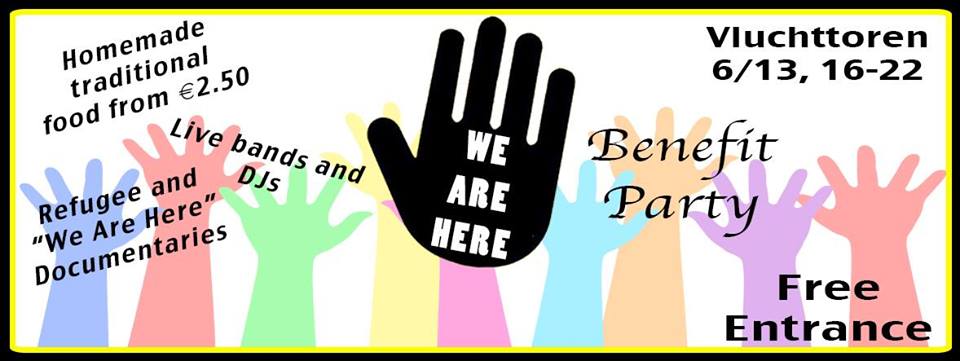
    Komende zaterdag 13 juni organiseert Wij Zijn Hier een swingend, informatief en smakelijk benefiet evenement voor & door Wij Zijn Hier.
    **** Entree is gratis!****

    Het evenement vindt plaats in de Vluchttoren aan de Sande Bakhuijzenstraat 2 te Amsterdam. Van 16:00 tot 22:00 zal de Vluchttoren haar deuren gastvrij openen met veel internationale lekkernijen, fantastische bands & dj’s, speeches en informatieve documentaires.
    Dit is in navolging van een zeer succesvol benefiet in de Vluchtgarage enige tijd geleden en eveneens als tegenuitnodiging voor de studenten van het Student Hotel, die recentelijk de vluchtelingen welkom heetten voor een feestje.
    Iedereen is van harte welkom! Zowel bekenden als nog onbekenden van de Wij Zijn Hier groep.
    Het doel is informatie over WZH geven, elkaar leren kennen, informatie uitwisselen, geld ophalen voor het noodzakelijke levensonderhoud van de bewoners en natuurlijk een gezellig feestje met elkaar maken. Met de fantastische dansers onder de vluchtelingen is dat gegarandeerd!
    11427229_975278842505679_7037315718993514682_n
    Een tipje van de sluier wat je kan verwachten:
    Heerlijke Ethiopische Injera, smakelijke vis uit de oven, kruidige kip met rijst en de beste Ethiopische koffie op traditionele wijze bereid….en meer!
    Muziek zal een kleurrijke afwisseling zijn van artiesten van buiten & binnen de Wij Zijn Hier groep! Namen volgen snel maar één geven we alvast weg…Grote Prijs van NL-winnaar en finalist van ‘De Beste Singer Songwriter’ Rogier Pelgrim! Maker van het strijdbare nummer met bijbehorende indrukwekkende clip ‘Won’t go Back’ over en met de vluchtelingen van Wij Zijn Hier.
    Verdere informatie over de activiteiten volgt de komende dagen!

    Laat je verrassen zaterdag en kom langs!

    ★ ★ ★ STRAATFEEST ★ ★ ★ ZONDAG 5 JULI 2015

    Benefiet voor de vluchtelingen van de “We Are Here” groep
    http://ostade233.nl/

    ZONDAG 5 JULI 2015 ≡ 14.00 – 19.00

    In de buurt van de van Ostadestraat 233, Amsterdam

    ≈ PROGRAMMA ≈

    • 14.15-14.45 Billenbijter, Roos Dansverhalen Poppenspel en Dans
    • 15.00-16.00 Fanfare van de Eerste Liefdesnacht
    • 16.00-16.10 Babs, Spoken Words
    • 16.10-16.40 WE ARE HERE LIVE
    • 15.00-16.30 Kiko Kinderatelier, creatieve workshop, windmolens maken
    • 16.40-17.00 Aardblij, Soupsisters Kindertheater
    • 17.00-17.15 Pink Refugee Rabbit, politieke scherpe recht voor d’r raap act
    • 17.15-17.45 KeGeKu, Live Latin music and Jazz
    • 17.45-18.15 Dj Sca … dansen op betoverende geluiden
    • 18.15-18.30 Loterij t.b.v. vluchtelingen Wij Zijn Hier
    • 18.30-19.30 Dj Sca … dansen op betoverende geluiden
    http://ostade233.nl


  • Letter from Choucha 2015

    Dear All,

    Choucha refugee camp that was officially closed by the responsible UNHCR leaving hundreds in limbo at the camp till date,at the Tunsian-Libyan border, since 2011. We would like to update you about our situation, though there is not much to be updated about: we are still displaced in the deserted remote camp. All plight not to be forgotten, though the camp was officially closed by the UNHCR, there are people still leaving in it.

    The situation in Choucha calls for urgent intervention, since we are suffering mental,physical psychological violations and torture, that reduces human power of concentration in the middle of nowhere. Extreme cases speak for themselves: a Sudanese is laying in Choucha after three major surgical operations that involved the spinal cord and his urine system, being abandoned in the camp without medical attention (negligence)and other several consequent cases denied. Moreover, we lack running water, sewage, food, and we are forced to beg alimentation on the main street heading to Libya. We believe every sane mind today knows that hunger is the world’s n. 1 health threat, that kills more people than any disease or virus that has ever been discovered. It is better for things to be stated with a direct factual basis. We are being placed in a life threatening situation.On the other side, we cannot go back to our countries of origin because of the individuals risk of persecution (same reasons we put forward in our requests for asylum to the UNHCR).

    Local integration is not a solution to Choucha for several reasons:
    .The general climate of discrimination and racism that many of us have to face,as demonstrated by several complains and testimonies had gone through without attention.

    . Lack of asylum/refugee system,that,even if its been enacted today Choucha is not supposed to be the experiment for the practise,hence many will remain under the impairism of past experience.
    .It has severally been stated officially to us in meetings with members of the government,choucha is not and has never been a priority topic of discussion and as human,we are the victims suffering and living the situation without any impact or support from the government,knowing fully well that the camp is situated in the middle of nowhere,the deserted remote geographical location chosen for the camp (6/7 km away from the day to day troubled border,putting us in a dangerous position).
    · Some of us were arrested in 2014 three consecutive times for exercising our legitimate rights of demonstrating,the authority and all human rights defending groups failed to help us,putting into consideration that our lives in Choucha for all these years is on hold,neither were we showing pleasure during all these process.Protesting against these decisions/situation that has existed all these years long,without suitable durable solution to end our plights.
    · Demographic arc of instability,i.e,political,economic E.T.C.
    Our appeal to the Tunisian government as host of Choucha refugee camp, hence its easy to perceive in all given statements  “that our demand for resettlement to a safe third country with effective system of asylum/refugee protection”, “not local integration in Tunisia”,as a proposed plan/program,human right leagues/experts,activists and the civil society,IS to urge the camp responsible UNHCR,under whose authority the camp was  established to accomodate the victims,consequence of the Libyan 2011 crisis and with whom our legal cases were registered and the International Committee upon the agreement/s with which the camp was enacted and closed, as well the essence base of The Universal Declaration Of Human Rights were made.
    Our struggle is instigated by our own suffering and our own experience,It is a struggle for the rights to live with human dignity in harmony with equal rights and justice,fair opportunities,to be accorded resettlement,not confined to Choucha open detention.
    Our Demand And Appeal To UNHCR And The International Committee
    .To be accorded resettlement to a safe third country counting with effective system of refugee/asylum protection.Not local integration.
    For all these reasons given,we call on your support of our course and demand.

    Remaining forgotten refugees at choucha/Unhcr camp of Libyan/Tunisian border

  • Choucha refugee camp to be closed – 2014

    Letter from Choucha  2015 (more info on choucha: here)

    Tunisia, the humanitarian emergency of the Choucha refugee camp
    Lamia Ledrisi / Mediterranean Affairs, 15 June 2015

    C_1bcd2ddce6


    To UNHCR, IOM, the Tunisian Red Cross, the Tunisian government and all the actors involved in the management of Choucha camp,

    12.10.2014

    Aware of the notice given by IOM and the Tunisian Red Cross to the people still living in Choucha camp about the forthcoming eviction of the camp, we, as a group of researchers, activists, academics and members of human rights organizations from Europe and Tunisia, denounce the intolerable treatment that you are planning to do against the refugees who have been living in the camp since 2011, with no effective solution for a space to stay. Humanitarian actors left those refugees dying in the desert after the official closure of the camp in June 2013, and most of them in fact have tried to cross the sea risking their lives –some also died. Now, you are trying to chase them from the only space they have for living, and without giving them any solution to their illegal) status in Tunisia – both refugees and rejected refugees are currently without a residence permit. You suggest them to resettle themselves in the Tunisian cities, but which kind of integration are you thinking about for people that UNHCR has denied of the international protection and who are now treated as illegal migrants in Tunisia?

    You have also encouraged them to go back to their country of origin, as if they would have gone to Libya and then fled to Tunisia for leisure. Some of them were born in Libya or in Choucha and have never seen their so-called country of origin, others fear political persecution in case they go back.. Moreover, the ridiculous amount of money offered by IOM for the “voluntary return” sounds as a mockery to those who spent years and years in Libya and whose life there has been destroyed by the war. The other automatic non-solution that you have not the courage to explicitly tell, is their last resort to take a boat and cross the Mediterranean: you are leaving them with no solution than risking to die at sea.

    With this statement we would like to address also the European Union to resettle in Europe all these (few) people left at Choucha camp and to state that we won’t leave people in the Choucha camp alone. We will monitor your actions. What you are trying to do as an ordinary measure, is indeed something that we will try to oppose in all the ways that we can. By leaving the people in the desert and now planning to evict them, you show the failures and the consequences of the European politics of externalization of asylum. These people have been living in the desert in a dangerous zone near the Ras Jadir border since 2011, while in Libya the political crisis is getting worse and worse: how can you say that they are not people of humanitarian concern? Many of them are sick, old or women with children – at least for those most vulnerable people there must be a solution! We do not say that Choucha is the solution for them: a camp is never a solution, actually it is a system of containment of people’s mobility. However, today Choucha is not a camp anymore, it is the only space where they can stay, and it is the space in which they carry on their struggle for claiming their resettlement in a third country: Many of them tried in vain to integrate in Tunisia, did not get jobs, experienced racism and bad treatment – so they returned to the camp.They are not still there for living their life at Choucha, but as a form of political collective struggle to demand a real solution, and you have been trying to tame their resistance since the beginning.

    Acknowledging the work all of you have done in the aftermath of the Libyan war we strongly believe that it is highly inhuman not to think of a concrete solution for people still living in the Choucha camp and who are unable to return to their so-called country of origin. These people are striving to survive since more three years now. Thus, we will continue to support their struggle and to hamper in any ways your strategy of abandonment and illegalization of people, and we will closely follow your next steps, firmly demanding to UNHCR and to the European Union:

    a) The resettlement of the people at Choucha camp in a safe third-country and to grant all of them a humanitarian protection as people who fled the Libyan war, that was supported also by European states

    b) To reopen their asylum dossiers considering the current geopolitical situation at the Tunisian-Libyan border

    c) To grant all the people at Choucha a concrete possibility of building their life in a safe space and to immediately regularize their juridical status

    d) To not evict the camp and to allow people from Choucha to come to Europe in a safe and legal way.

    1359405606-choucha-refugee-camp-demonstrates-in-tunis


    Report Choucha camp Aug. 20 2014


    A brief report from Choucha refugee camp in Tunisia, close to the Ras Jadir border with Lybia

    Choucha, that space still exists:

    Three years and half after the opening of Choucha refugee camp , nine kilometers from the Libyan border of Ras Jadir and in the midst of the Tunisian desert, about 150 people still live there despite UNHCR officially closed the camp in June 2013.

    The tents are placed just few meters from the main road that connects Tunisia and Libya, and so people at Choucha wait that Libyans leave them food and water. In fact, UNHCR had already stopped to give food and water to the rejected refugees in October 2012, pushing them to abandon the camp and suggesting people to return to Libya or to their country of origin with IOM’s return projects. On the contrary, many of the rejected are still at Choucha, since it is incredibly hard for them to find a “legal” job – labelling them as rejected, UNHCR has de facto produced them as illegal migrants on the Tunisian territory – and consequently also to find an affordable place for living in some Tunisian towns. “At least, Choucha is free, the desert is free”: for this reason, also among those who moved to Medenine, Tunis or Ben Guerdane, a huge number has come back to the camp – by now, a self-organized camp. Even some of the statutory refugees have been living in the camp for three years and half: those who have been denied of the resettlement in a third country in principle have been “offered” by UNHCR and the Tunisian Red Cross to stay in Tunisia with a program of local integration. But many refused and claim to be resettled out of Tunisia, since there are not even the basic legal conditions for staying there and the economic crisis makes almost impossible for them to build a new life.

    Indeed, to date Tunisia has not a proper refugee law, despite it has signed the Geneva convention. And if on the one hand the presence and the work of UNHCR is tolerated, actually the Tunisian government does not release any residence permit to the refugees. Today at the camp there are people seriously ill and who cannot move, and those among them who have not the refugee status are not even allowed to receive the first medical aid –or better, according to the Tunisian law they are entitled to that, but actually at the hospital in the city of Ben Guerdane rejected refugees from Choucha have been denied of care. “We are feed by Libyans!”: people at Choucha repeat this, remarking that neither UNHCR nor other national or international organizations support them in any way. And so people wait Libyan cars passing on the main road, and throwing them bottles of waters, bread and milk.

    Choucha has now become a military zone, and only the army is at the camp, all humanitarian and international organization left the last year. But the conditions of those who are still there is not less worry than any other context that is now labelled by UNHCR as a humanitarian concern. Certainly, it cannot be described in terms of emergency, since that condition have been persisting in the same way since 2011 –it is rather a permanent condition of being dismissed from any humanitarian gaze, the junk of the Libyan war.

    “Choucha does not exist anymore”: this laconic statement is repeated by all the organizations that were involved in the management of the camp and of its ‘inhabitants’ – IOM, Red Cross, UNHCR, Danish Refugee Council, Islamic Relief. In five words they erase a space and the presence of those people still there.

    Actually, Choucha has become a centripetal space for those who are rescued at sea: after being taken to Medenine, most of them go to Choucha, to find a place to stay. But the Tunisian army, in cooperation with UNHCR tries to block them, since the current plan is to definitively empty Choucha and to transform it into a pure military zone. In September the camp probably will be evicted by the Tunisian army for “security reasons” , and the people still living there won’t have other solutions than going back to Libya and then maybe trying to cross the Mediterranean, or remaining illegal presences on the Tunisian territory. This is in fact what many of the people at Choucha have done in the last months going back to Libya and paying 1200 dollars for trying to cross the sea on overcrowded vessels: some arrived in Europe and now are in Italy or Germany or Sweden, and many died at sea. Instead, those who have been rescued by the Tunisian Navy are put into jail, since as they try to “illegally” leave the country, de facto they loose their refugees status, as UNHCR’s officer in Zarzis firmly stated.

    UNHCR is shielding its “politics of discharge” – that leaves people of humanitarian concern abandomned in the desert – sending ahead Tunisian organizations like the Red Cross, to do the “dirty work” with the people rescued at sea (migrants are registered for the asylum claim in Medenine by the Tunisian Red Cross and asylum seekers are not allowed to go to UNHCR office). When two refugees from Choucha went to UNHCR headquarters in Tunis two months ago, one of them very ill and demanding to solve his health problems, they were put into jail by Tunisian authorities while they were waiting to enter UNHCR office. A similare sort happened to the group of rejected refugees that in February started a sit-in in front of the European Union delegation in Tunis: all of them were put into jail for two weeks and then taken to the camp.

    In fact, also those who accepted the so called local integration programs state quite clearly that no integration is de facto envisaged by Tunisian authorities that have not given any possibility to refugees to regularize them. And UNHCR’s projects for local integration play precisely with this ambiguity, namely with the actual impossibility to grant a residence permit.

    Migration policies is after all also a politics of numbers: in order to count as a problem or as an issue to be tackled, the people in question must be a considerable number, otherwise “they are just few persons in the desert, they are about 100 people, nothing”. The politics of waste makes that after an incessant production of differentiated migration profiles, something that cannot be assimilated remains. The uncountable few or the lesser evil”, those that no humanitarian concern can take into account. They are few, just a small amount of waste that confirms that the exclusionary politics of asylum has succeeded…More or less 100 people: this is the vague answer that UNHCR gives when you insist with them to talk about Choucha. Instead, the last week people counted themselves to face such elusive number and say: “we are 134, no more, no less. We demand resettlement and protection for everybody, no more, no less”.

    In the face of all this, refugees and rejected refugees at the camp stress that Choucha still exist as well as the persons who lived there without accepting to give up their struggle: “we have been living in the desert for three years and half, and we are in danger in this desert. There is no solution for our lives staying here”.

    The impossible demand incessantly made by refugees and rejected refugees for being resettled in a third country, actually is for us the only way for actively supporting the struggle of people at Choucha camp. Challenging the codes and the boundaries of what can be “legitimately” demanded is part of a struggle that does not claim but acts and takes those rights that are not envisaged for the “waste”-people at Choucha camp. Tunisia is currently preparing an asylum law with UNHCR and the European Union – a law that is one of the main stake of the Mobility Partnership with the EU, signed in March 2014 but that actually is still under negotiation. The establishment of a proper asylum system in Tunisia will be certainly a fundamental step for all the refugees that in Tunisia have accepted the local integration program; however, this cannot be taken as a reason for giving up the struggle of the persons who are still in Choucha, and who after three years and half in the desert have only that space for staying. What they demand to European states is to go beyond UNHCR’s partitioning system that sorted between refugees, rejected refugees and non-resettled refugees and to start from a very simple point:

    beyond their escape from the Libyan conflict, they have been living in the desert for three years and half, now are also abandoned by all humanitarian organizations, and they must be entitled of a humanitarian protection from those countries that were involved in the Libyan war.

  • Watch the Med Alarm Phone

    For Boatpeople in Distress at Sea and in Cases of Pushback

    Campaign “Ferries not Frontex” towards an open Mediterranean space! (march 2016)

    WTM Alarmphone verklaring 1 jarig bestaan (12 okt. 2015)

    In solidarity with migrants at sea! The Alarm Phone 3 years on with dutch press release

    Moving On – 1 Year Alarm Phone Brochure and the many remarkable experiences made by Alarm Phone members in the project’s first year of existence (23 jan. 2016) with dutch press release

    News, Reports & Investigations

    THIS NUMBER IS NOT A RESCUE NUMBER!
    But an ALARM NUMBER to support rescue operations!

    What to do if you are in distress at sea or getting pushed back:
    1. Call first the coast guards and tell them about your situation of distress
    2. Then call the Alarm Phone
    3. Note that we cannot rescue, we do not have boats or helicopters
    4. We will make sure that your distress call is noted and acted upon
    5. If you are not promptly rescued by the coast guards we will inform the public media and politicians to put pressure on the rescue services.

    —————————————————————————————————

    Alarm Phone Nr.:  + 334 86 51 71 61

    —————————————————————————————————

    We know coastguards act quite differently. There are areas where they do their job well and rescue promptly. But refugees also report that they get pushed back by coast guards or are treated violently. When a distress call is received, we will call the coast guards ourselves, and follow up on their response, making known to them that we are informed and ‘watching’ them. We want to support you in protecting your lives and your right of freedom of movement.

    FAQ (10 questions posed to the WTM alarm phone project),

    Safety at Sea / Instructions for a Distress Call.

    Transnational Monitoring against the deadly injustice at sea! (how Watch the Med works) and

    Risks,Rights &Safety at Sea (informations for people considering to cross the sea).

    For a push back operation, see “They want to see us drown” – Survivors of a push back operation in the Aegean Sea report 16.11.2014 / Chios/Greece-Cesme/Turkey

    For the deadly delays in rescue operations, see the exemplary case from the 11th of October 2013 when more than 200 boat people drowned: Shipwreck 11th of October 2013.

    For general information about the situation in certain european countries for refugees – see: w2eu.info / welcome to europe

    Moet een kapitein een bootje met migranten in nood redden? (Vrije Universiteit Amsterdam)


    [Press Release, 8th of October 2014] *Watch The Med Alarm Phone against Left-to-die cases at Sea* »Our project is no solution, but an emergency intervention«

    Call for Watch The Med Alarm Phone” for Boatpeople

    (signatures below!)

    11th of October 2013: Refugees from a sinking boat called again and again Italian coastguards via satellite phone in order to be rescued, but their SOS signals were not taken seriously. The boat carried more than 400 people and was shot at in the night before by a Libyan vessel. Despite the Italian and soon later the Maltese authorities having been warned of the imminent distress of the passengers, rescue efforts were delayed for several hours and patrol vessels arrived one hour after the boat had sunk. More than 200 people died, only 212 people were saved.

    What would have happened if the boatpeople could have directed a second call to an independent phone-hotline through which a team of civil society members could raise alarm and put immediate pressure on authorities to rescue?

    One year after the tragedy from Lampedusa on the 3rd of October
    and after the left-to-die case mentioned above, the situation is no less dramatic. Although the Italian military operation “mare nostrum” led to the rescue of about 100.000 refugees and migrants within the last 11 months, only in the central Mediterranean area more than 1300 boatpeople became new victims of the border-regime. In the beginning of 2014 we witnessed more death at the external borders of EU: on the 20th of January 12 refugees died when their vessel sunk while being towed at high speed by a vessel of the Greek Coast Guard aiming to push it back towards the Turkish coast.
    And on the 6th of February the Spanish border guards shot with plastic-bullets at swimming migrants who tried to enter the Spanish enclave of Ceuta. More than 14 people died as a result.

    These cases are not isolated
    , but rather the most obvious amongst many similarly deadly violations perpetrated against migrants at sea throughout the Mediterranean. Would these deaths have occurred had civil society been informed and had exercised its pressure and influence before rather than after the incidents?
    We can no longer bear to remain helpless as tragedies repeat themselves. We want to do more than condemning these violations after the incidents. We believe that an alternative alarm network established by the civil society on both sides of the Mediterranean Sea could make a difference.

    We neither possess any rescue-teams, nor can we offer direct protection. We are aware of our limited capabilities and of the provisional and precarious character of our initiative. But we want to immediately raise alarm when refugees and migrants get into situations of distress at sea and are not rescued promptly. We want to document in real-time and scandalize immediately when boatpeople become victims of push-back operations or are sent back to countries such as Libya, where migrant rights are repeatedly violated. We want to intervene with political pressure and public mobilisation against the daily injustices at the external borders of the EU.

    We know that such pressure can be effective because it has been exercised already for several years by a few individuals who, through family and solidarity ties, have received phone calls from migrants at sea, alerted authorities and made sure that rescue operations had been carried out. We want to broaden and strengthen this network and reinforce its political role in support of migrant rights and the freedom of movement.
    Thus we aim to establish – in close cooperation with the monitoring project Watch The Med – an alternative alarm-phone running 24/7 as of the 10th of October 2014. It will be managed by human rights activists from both sides of the Mediterranean and offer a multilingual team. We will advise all persons in distress at sea to first alert the officially responsible rescue teams. But we will also call the coast guards ourselves, and follow up on their responses, making known to them that we are informed and “watching” them. If they fail to respond, we will gather all imaginable political and public pressure to force them to do so.
    We will alarm captains of commercial boats close by as well as international journalists, requesting the support of politically active religious leaders of all confessions as well as support of famous supporters. We will use the critical net-community for just-in-time-campaigns and call everybody to contribute with the creation of further forms of intervention.

    The left-to-die cases at sea, the human right violations of the EU border agency Frontex and coast guards in all areas of the Mediterranean Sea have to be stopped immediately. We need a civil society network on both sides of the Mediterranean Sea which can enforce political pressure for the lives and the rights of boatpeople, and we want to be part of it.

    Such an alternative alarm network would be a first but an urgently required step on the path toward a Euro-Mediterranean area that is not characterised by a deadly border regime but by solidarity and the right for protection and the freedom of movement.
    An Initiative of: Welcome to Europe  |  Afrique Europe Interact  |  borderline-europe  |  Noborders Marocco  |  Forschungsgesellschaft Flucht und Migration  |  Voix des Migrantes

    Signatures for the call:

    Madjiguene Cisse, former Sans-Papier-Movement in Paris, Dakar | Étienne Balibar, Philosopher, Paris | Elfriede Jelinek, Author & Nobel Literature Prize Winner, Vienna | Fr. Mussie Zerai, Habeshia Agency, Rome | Mohanad Jammo, Physician & Survivor of 11.10.13 Shipwreck, Aleppo/Bad Bergzabern | Fabrizio Gatti, Journalist, Rome | Jean Ziegler, former U.N., Special Rapporteur on the Right to Food, Geneva  |  Emmanuel Mbolela, author of ‘Mein Weg vom Kongo nach Europa’, Amsterdam  |  Boats4People  |  Imed Soltani, La Terre pour Tous, Tunis | José Palazon, Pro.De.In, Melilla | Mikel Araguas, Andalucia Acoge | Conseil des Migrants Subsahariens au Maroc | Petja Dimitrova, Artist, Academy of Fine Arts Vienna | Antonio Negri, Philosopher, Paris | Nina Kusturica, Filmmaker, Vienna | Network of Social Support to Refugees and Migrants, Athens | Gabriele del Grande, Journalist, Milano | Jesuit Refugee Service Schweiz | Stiftung:do, Hamburg | Ousmane Diarra, AME (Association Malienne des Expulsés), Bamako |  Stefan Schmidt, Captain of Cap Anamur 2004, Refugee-Commissioner of Schleswig-Holstein, Lübeck | FTDES (Forum Tunisien pour les Droits Économiques et Sociaux), Tunis | ODS, Sevilla | Karl Kopp, Director of European Affairs PRO ASYL and ECRE, Frankfurt | Amadou Mbow, AMDH (Association Mauritanienne des Droits de l’Homme), Nouakchott | Fulvio Vassallo Paleologo, L‘Altro Diritto, Sicilia |  Elias Bierdel, 2002-2004 Leiter der Cap Anamur, Austria | Martin Glasenapp, Medico International, Frankfurt | Patrice Boukar Zinahad, A.R.A.CE.M (Association des Refoulés d’Afrique Centrale au Mali), Bamako | KEERFA – Movement Against Racism & Fascist Threat, Athens | ATMF, France | ARCI, Italy | Ferenc Kőszeg, Honorary Chairman of the Hungarian Helsinki-Committee, Budapest | Borderline Sicilia Onlus | Sandro Mezzadra, Border and Migration Researcher, Bologna | Osaren Igbinoba, The Voice Refugee Forum, Jena | Solidarité sans Frontières, Switzerland | Village all together, Mytilini | Association Les voix libres, Strasbourg | Article 13, Tunis | Daniel Moundzego, ARSF (Association des Refugees Sans Frontieres), Douala | Ilias Panchard, Co-Präsident Junge Grüne Schweiz, Lausanne | All Included, Amsterdam | MigSzol – Migrant Solidarity Group of Hungary | Humanistische Union, Germany | Barbed Wire Britain | Balthasar Glättli, Fraktionspräsident Grüne, Schweiz  |  Orcun Ulusoy, Researcher, The Hague | Maria Bacchi, Comitato Scientifico Fondazione Langer, Bolzano & Associazione Mantova Solidale | Chabaka, Tanger  |  Antiracist Initiative of Thessaloniki |  Gergishu Yohannes, Initiative gegen Tod im Mittelmeer 2009 e.V. Bonn  |  Karl Heinz Roth, Social Historian & Physician, Hamburg  |  Michael Genner, Asyl in Not, Vienna  |  Conseil des Migrants France  |  CADTM Europe  |  Africa con voz propia  |  APDHA, Spain  |  The Refugee Councils, Germany  |  David Fedele, Filmmaker, Sydney  |  Franck Düvell, Researcher, COMPAS, Oxford  |  ALECMA (Association Lumiére sur l`Emigration Clandestine au Maghreb)  |  Rete Antirazzista Catanese  |  Comitato NoMuos/NoSigonella, Catania  |  Paolo Cutitta, Migration researcher, Amsterdam  |  Federica Sossi, Università di Bergamo  |  Hélène Yamta, La Voix des Femmes Migrantes, Rabat  |  Sabine Hess, Leiterin des Labors für kritische Migrations- und Grenzregimeforschung, Göttingen  |  Campaign to Close Campsfield  |  Luciana Zarini, retired teacher, Palermo  |  Maria Rosa Ragonese, teacher, Palermo  |  Association Horizons Migrants; bordermonitoring.eu  |  Wolf Dieter Narr and Dirk Vogelskamp, Commitee for Basic Rights and Democracy, Berlin/Cologne  |  Ahmed Jlassi, Filmmaker and University teacher, Tunis  |  Atmf (Association des Travailleurs Maghrébins de France). section Bas-Rhin  |  U.D.E.ES, l’union des étudiants de Strasbourg  |  CCFD-terre solidaire Strasbourg  |  Hatem Gheribi, Tunisien, Strasbourg  |  Mehdi Mohamed Amadir, Moroccan, Strasbourg  |  Omar Naman, Syrian refugee, Strasbourg  |  ATTAC Liège  |  Initiativkreis MenschenWürdig, Leipzig  |  Prof. Sabine Broeck, Research Group Black Knowledges, Universität Bremen  |  glokal e.V., Berlin  |  Lampedusa-Bündnis Göttingen  |  Integrationsrat Göttingen  |   Imam-Jonas Dogesch, Network of Migrants Organisations in Mecklenburg­-Vorpommern  |  Fouad HASSAM  |  Peter Birke, SOFI, Göttingen  |  Barbara Cárdenas and Willi van Oyen, Left Party, Hessen  |  Action-Alliance against Deportation, Rhine-Main  |  no one is illegal, Hanau  |  Lampedusa in Hanau  |  no one is illegal, Cologne  |  NoLager Bremen  |  transact  |  Netzwerk Kritische Migrations- und Grenzregimeforschung  |  European Civic Forum  |  Peter Marhold, Helping Hands, Vienna  |  Ulrich Brand, Institutsleiter und Professor für Internationale Politik an der Universität Wien  |  Network for the Political and Social Rights, Athens  |  Augenauf Bern  |  Bleiberecht Bern  |  Sans-Papiers-Anlaufstelle Zürich SPAZ  |  Johannes Bühler, Autor des Buches “Am Fusse der Festung”, Fribourg  |  Salvatore Pittà, Journalist und Aktivist, Bern  |  Pauline Milani, Präsidentin SOSF, Lausanne  |  Myriam Schwab-Ngamije, CSP Vaud, Lausanne  |  MediNetz Bremen  |  Die Linke Bremen  |  Recherche International e.V., Köln  |  Charlotte Wiedemann, Journalistin, Berlin  |  Wohnungsbaugenossenschaft WiSe e.G.  |  Stadtkommune Alla Hopp, Bremen  |  Tobias Linnemann, Diplompädagoge, Bremen  |  Bruno Kraft, Diplompädagoge, Bremen  |  Luca Bräuer, Schüler, Bremen | Veith Weers, Bremen |  Barbara Funck, Studentin, Bremen |  Cornelius Hertz, Galerist, Bremen |  Sarah Lempp, Journalistin |  Ted Gaier, Goldene Zitronen  |  SOAS Detainee Support (SDS), London  |  Cetta Mainwaring, Assistant Professor, University of Waterloo  |  Right to Remain, London  |  kein mensch ist illegal, Hamburg  | Association pour la Défense des Emigrés Maliens (ADEM), Bamako  |  Association Retour Travail Dignité (ARTD), Bamako  | Association des Migrants Repatriés de Libye et de la Cote d’Ivoire (AMRLEC), Bamako  |  Association des Femmes et Enfants Repatriés et Migrants de la Cote d’Ivoire (AFERMACI), Bamako  |  Association des Jeunes Reoules de l’Espagne de la Commune Yanfolila (AJRECY), Yanfolila  |  Hellenic League for Human Rights, Athens  |  Solidarity Social Clinic (KIA), Thessaloniki  |  Yiorgos Tsiakalos, Professor Emeritus, Aristotle University of Thessaloniki  |  Spyros Marchetos, School of Political Sciences, Aristotle University of Thessaloniki  |  Jérôme Valluy, Université Panthéon-Sorbonne  |  Gilles Reckinger, Department of History and European Ethnology, Innsbruck  |  Alexander Pollak, SOS Mitmensch, Vienna  |  Anna Fuchs, Berlin  |  www.migrazine.at – Online-Magazin von Migrantinnen für alle  |  Medinetz Freiburg  |  Die ganze Bäckerei, Leipzig  |  Sieglinde Rosenberger, Department of Political Science, Head of the research group INEX ‘The Politics of Inclusion & Exclusion’, Vienna  |  Peter Herrmann, EURISPES, Rome  |  Stefan Thimmel, Rosa Luxemburg Stiftung, Berlin  |  Angelika Wahl, Frankfurt  |  Konstantinos Tsitselikis, Associate Professor, University of Macedonia, Thessaloniki  |  Athanasios Marvakis, Associate Professor, Aristotle University of Thessaloniki  |  Institute of Race Relations, London  |  Gurminder K. Bhambra, Professor of Sociology, University of Warwick  |  South Yorkshire Migration and Asylum Action Group  |  No One Is Illegal, England   |  L’Association Rencontre Méditerranéenne pour l’Immigration et le Développment (ARMID), Tanger  |  Spitou Mendy, SOC-SAT, Almería  |  Noborder, Frankfurt  |  Helga Dierichs, Munich  |  Matthias Plieninger, Hamburg  |  Ramona Lenz, Medico International, Frankfurt  |  Ivana Domazet, Refugee Council Brandenburg, Potsdam  |  Antirassistisches Netzwerk Sachsen-Anhalt  |  Arbeitskreis Antirassismus, Magdeburg  |  Anne Bathily, Brussels  |  f.lo.p.s, autonomous feminist women-lesbian group, Bremen  |  no-racism.net, Vienna  |  acompa, assistance group for refugees, Bremen  |  Christian Peacemaker Teams, Mediterranean  |  Kommune Niederkaufungen  |  Natalia Paszkiewicz, Anthropologist, London  |  Alexander Stoff, Vienna  |  Hannelore Stoff, Vienna  |  Susanne Heim, Berlin  |  Youth without Borders, Germany  |  Afghans United Association, Athens  |  Österreichische Lagergemeinschaft Ravensbrück & Freunde, Vienna  |  Nadine Kegele, Author, Vienna  |  Dr. James Brassett, University of Warwick  |  Alev Korun, Abgeordnete zum Österreichischen Nationalrat, Vorsitzende des parlamentarischen Menschenrechtsausschusses  |  Thalia Tsalouhidou, Apothekerin, Solidarische Klinik, Athens  |  ausbrechen, Paderborn  |  David Loher, Social Anthropologist, Bern  |  Harald Bauder, Ryerson Centre for Immigration & Settlement (RCIS), Toronto  |  Andrea Ypsilanti, Institut Solidarische Moderne, Member of the Hessian parliament (SPD)  |  Bremer Friedensforum  |  Analyse & Kritik, newspaper for left debate, Hamburg  |  Resf13, Réseau Éducation Sans Frontières, France  |  Dietrich Gerstner, Kirchlicher Entwicklungsdienst – Menschenrechte und Migration, Hamburg  |  Tom Rodriguez-Perez, Football Beyond Borders, London  |  Yasmine Accardo, Activist, Naples  |  Flüchtlingsinitiative Bremen  | Heinz Nigg, Visual Anthropologist and Community Artist, Zurich  |  Athanasios Papaisiou, Teacher at the State Conservatory of Thessaloniki  |  Flüchtlingsrat Bremen  | SolidaritéS (mouvement anticapitaliste, féministe et écologiste),  Suisse  |  Ulla Jelpke, MdB, Innenpolitische Sprecherin der Fraktion DIE LINKE, Berlin  |  Frans Zoer, Visitors Group to migrant detention centre, Amsterdam  |  ASTU (Action citoyennes interculturelles), Strasbourg  |  FelS (Für eine linke Strömung), Berlin  |  Senol Akkilic, Integrations- und Jugendsprecher der Wiener Grünen im Rathaus  |  Kritnet Schweiz  |  Mattea Meyer, Kantonsrätin SP, Zürich  |  Salvatore die Concilio, SPAZ Vorstand und alt Gemeinderat SP, Zürich  |  Shedhalle, Zürich  |  Solidarités, Switzerland  |  Sarah Schillinger, Migrationsforscherin und Aktivistin, Basel  |  Ueli Mäder, Professor für Soziologie, Basel  |  Andrea Vogel, Ärztin, Bremen  |  Joachim Welsch, Osnabrück  |  Katerina Stavroula, journalist, Athens  |  Elias Perabo, Adopt a Revolution, Berlin  |  Dr Chris Rossdale, Royal Holloway, University of London  |  Center for Political Beauty, Berlin  |  Christiane Benner, Geschäftsführendes Vorstandsmitglied der IG Metall, Frankfurt  |  Vicki Squire, Associate Professor, University of Warwick  |  Solidaritätsnetz Sans-Papiers, Bern


    The Watch The Med Alarm Phone is a novel project which will be launched in October 2014 by activist networks and civil society actors in Europe and Northern Africa. It responds to the human rights violations and the unabated dying of migrants and refugees at sea, as well as the militarisation and externalisation of EU borders. 2014 is already the deadliest year ever recorded with at least 3000 people dying in their attempt to overcome Europe’s external borders. This year, the Italian navy launched the ‘Mare Nostrum’ operation, an ambivalent process that further extended Europe’s border surveillance and (potential) repression of migratory movements but that became also appropriated by about 130.000 migrants and refugees who made it to European shores. However, the Mare Nostrum operation is ending and replaced by ‘Frontex Plus’ and it seems certain that the new mission will not be as extensive as Mare Nostrum had been so that even more people will die in their attempts to cross the border.
    This alternative alarm network is the first and an urgently required step toward a Euro-Mediterranean area that is not characterised by a deadly border regime but by solidarity and the right for protection and the freedom of movement.
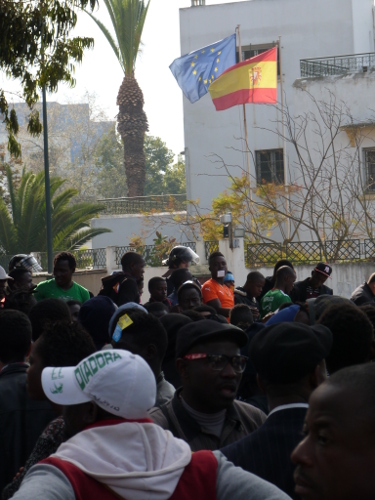
  • Declaration conference migration Sokodé

    oeh-logo_gif_klein19/04/14 ATELIER SUR LA MIGRATION

    THEME : « Etat des lieux du phénomène migratoire : enjeux et défis pour la jeunesse africaine »

    DECLARATION FINALE (more…)

  • visit to Association Togolaise des Expulsés in Sodoké

    oeh-logo_gif_klein

    Here is a short first report of the visit of the Togo-delegation of Afrique-Europe Interact consisting of 4 Togolese and 3 European members of AEI Europe and 2 Malian members of AEI Mali.
    180414_ATE_AEI2

    The aim of the delegation is to support our new member, the Association Togolaise des Expulsés (ATE), and to meet more organizations of the social movements in Togo.
    We met quite some activists of migrant, womens and human rights movements, journalists, lawyers between 14th and 23d of 2014 in Lomé capital and in Sokodé where the ATE is located and where many (deported) migrants come from or live. We were also interviewed together with the ATE (first time) at a live radio in Sodoké.
    180414_ATE_AEI3
    We met so many deported refugees whom we interviewed : one drugged before/during, one imprisoned for 6 month after arrival in Lomé, one family with three children born in Switserland deported after 17 years (!) in Europe and now begging in the streets of Sokodé -, families of migrants that drowned in the sea form Nigeria to Gabon.
    180414_ATE_AEI6
    We had a very good exchange between ATE and AEI about possible common projects and common ideas.
    190414_ATE_conference1
    The conference ATELIER SUR LA MIGRATION – Thème : « Etat des lieux du phénomène migratoire : en jeux et défis pour la jeunesse africaine » was well attended, some 100 people including 30 expulsed migrants, a table ronde sur le thème : – Deportation et la politique migratoire Européenne, Suivi des migrants dans les pays d’acceuil, Developpement et démocratie.
    190414_ATE_conference4
    Followed was the projection de film « Da.Sein » sur la situation des migrant-e-s de retour forcé de l’Europe suivi de commentaire.
    200414_ATE_interview4deportee who explains how he was send from Amsterdam to Senegal with his hands tied behind his back, his legs tied together and his head pushed between his legs. After one night at the airport prison in Dakar he was sent tied to Lome.